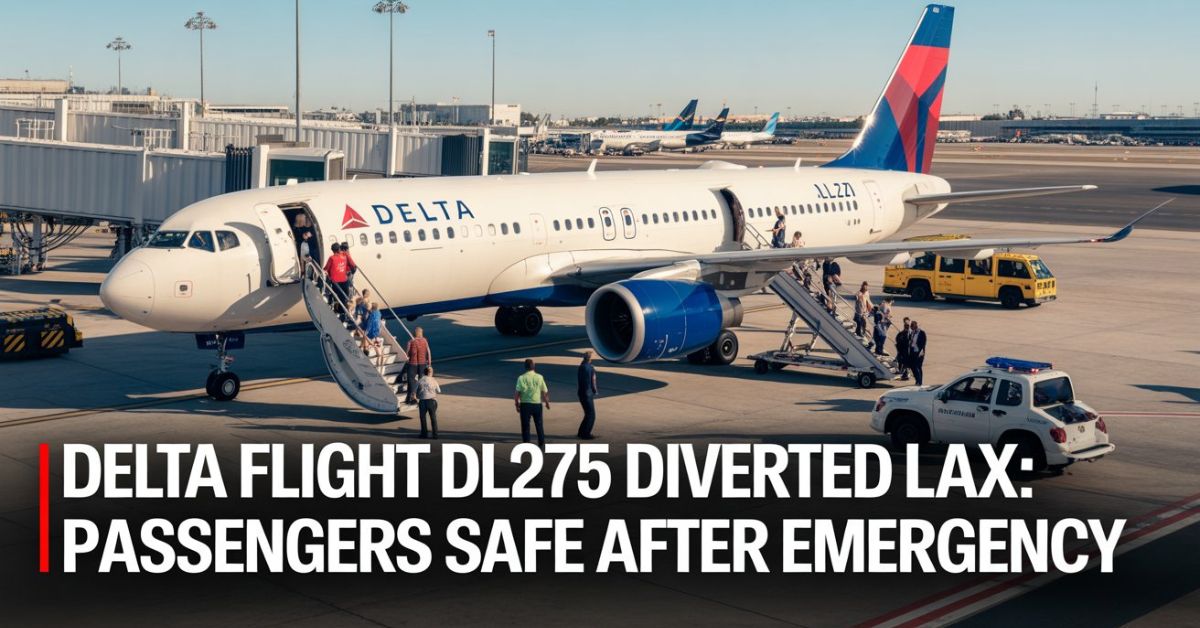
Delta flight DL275 diverted LAX, operating the long-haul international route Detroit to Tokyo, faced an unexpected situation when a mechanical/technical problem forced the flight to divert. What was meant to be a smooth trans-Pacific journey quickly turned into a tense scenario requiring precise flight crew decision-making and coordination with air traffic control.
The diversion to LAX emergency landing procedures ensured passenger safety and allowed for rapid assessment of the Airbus A350-900 mechanical issue that triggered the emergency. This incident underscores the critical importance of aviation safety measures and highlights how airlines manage passenger safety during diversions while maintaining operational integrity during unexpected flight disruptions.
What Happened on Delta Flight DL275 Diverted LAX
Delta Flight DL275 departed Detroit slightly behind schedule, bound for Tokyo Haneda. Several hours into the flight, pilots detected an engine anti-ice system malfunction, a serious issue that could affect high-altitude performance. This prompted immediate action, following strict aviation emergency protocols and coordination with air traffic control.
The flight crew decision-making ensured a smooth transition into emergency procedures. Cabin crew reassurance helped maintain calm inside the cabin, and passengers were regularly updated. The trans-Pacific flight disruption highlighted the importance of passenger safety during diversions and efficient emergency landing logistics at large airports like LAX.
The Incident: Why Delta Flight DL275 Was Diverted to LAX
The cause of the diversion was a mechanical/technical problem with the aircraft’s engine anti-ice system. Ice accumulation can compromise engines at high altitude, and pilots recognized the risk immediately. Choosing LAX allowed for a safe landing at Los Angeles International Airport with full emergency support.
This incident shows the significance of crew response to in-flight emergencies. The pilots followed emergency checklists, communicated constantly with ATC, and ensured that passenger experience during diversions remained calm. LAX’s preparedness also ensured a smooth landing without major disruptions.
Timeline and Reason Behind the DL275 Diversion
Delta Flight DL275 took off from Detroit and initially climbed smoothly. Several hours later, the crew noticed Airbus A350-900 mechanical issue alerts. Pilot early detection of system issues allowed immediate assessment, preventing further risk.
After notifying ATC, the crew decided to divert to LAX. Emergency teams prepared for the LAX emergency landing, and passenger safety during diversions became the top priority. Coordination between Delta, ATC, and LAX ground staff ensured a well-executed landing plan.
Passenger Experience During Delta Flight DL275 Diversion
Passengers reacted with mixed emotions. Some were concerned when the diversion was announced, while others trusted the flight crew decision-making. Passenger statements and reactions highlighted the calming effect of frequent updates and cabin crew reassurance.
The Delta Flight DL275 delay caused missed flight connections, requiring rebooking and accommodations. Delta staff assisted passengers efficiently, ensuring flight rebooking and accommodations were organized. Despite disruption, passengers praised the professionalism and safety focus of the crew.
Landing and Emergency Protocols at LAX
Upon notification, LAX airport emergency response teams mobilized immediately. Fire trucks, medical personnel, and ground support were ready for the LAX emergency landing. Runways were cleared and prioritized, ensuring a safe landing at Los Angeles International Airport.
The Airbus A350-900 touched down smoothly. Emergency procedures ensured passengers remained secure while engineers assessed the engine anti-ice system malfunction. Coordination minimized disruptions to other flights and reinforced emergency landing logistics.
Delta Airlines Response and Passenger Compensation
Delta Air Lines issued a statement confirming the Delta flight DL275 diverted LAX due to safety concerns. The airline emphasized passenger safety during diversions and commended the crew response to in-flight emergencies.
Passengers affected by the trans-Pacific flight disruption received flight rebooking and accommodations, including hotels and meal vouchers. Delta’s clear communication reassured travelers, demonstrating how airline operational challenges are managed professionally during emergencies.
Post-Landing Procedures and Investigation
After landing, engineers inspected the Airbus A350-900 mechanical issue. Delta’s maintenance team, alongside Rolls-Royce specialists, confirmed the engine anti-ice system malfunction. FAA oversight ensured all safety protocols were followed.
The investigation continues to determine root causes and prevent future issues. Insights from this incident will strengthen aviation safety measures and highlight the importance of training and preparedness of crew in managing emergencies efficiently.
Impact of the Diversion on Passengers and Operations
Passengers faced missed flight connections and longer layovers due to the unexpected flight disruption. Despite this, the passenger experience during diversions remained positive because of clear communication and assistance from Delta staff.
The operational impact on Delta Air Lines included rescheduling crews, aircraft maintenance, and fuel costs. LAX handled the emergency efficiently, showcasing LAX airport emergency procedures and proper emergency landing logistics.
| Impact Area | Details |
|---|---|
| Passengers | Rebooking, hotel accommodations, missed connections |
| Airline | Crew scheduling, aircraft maintenance, additional costs |
| Airport | Runway priority, emergency team coordination, minimal delays |
Understanding Flight Diversions and Aviation Safety
Flight diversions occur due to mechanical/technical problems, medical emergencies, weather, or international flight emergencies. Safety is always prioritized over schedules.
Modern aviation relies on pilot early detection of system issues, crew response to in-flight emergencies, and close air traffic control coordination. The Delta Flight DL275 diverted LAX case demonstrates the effectiveness of aviation safety measures and proper air travel risk management, ensuring passengers reach their destination safely even during emergencies.
Conclusion
The Delta Flight DL275 diverted LAX incident highlights the importance of aviation safety measures and professional flight crew decision-making. Thanks to training and preparedness of crew and LAX airport emergency response teams, all passengers experienced a safe landing at Los Angeles International Airport despite a serious engine anti-ice system malfunction. This event proves that even long-haul flight complications can be handled efficiently, prioritizing safety above all else.
FAQs
What happens when a flight is diverted to Delta?
The flight is rerouted to an alternate airport for safety, and passengers are assisted with rebooking and accommodations.
What is the Delta 45 minute rule?
Delta requires flights to be boarded within 45 minutes of gate arrival to maintain on-time departure standards.
Did Delta cancel thousands of flights due to global IT outage?
Yes, Delta temporarily canceled flights during a major IT outage, affecting schedules and requiring rebooking for passengers.
What happened to the pilots of Delta flight 1141?
Delta flight 1141 crashed in 1988 due to pilot error; the crew faced investigation, and new safety procedures were implemented afterward.
What is delta flight dl275 japan diversion lax status?
Delta Flight DL275 diverted to LAX due to an engine anti-ice system malfunction, and passengers landed safely.
What is Tokyo to Detroit Flight status today?
Flight status depends on the schedule; passengers should check Delta’s official website or app for real-time updates.
What is Delta flight to Tokyo today status?
Current flight information can be checked via Delta’s live tracker for departures, arrivals, and delays.

Alex Morgan is a passionate writer delivers accurate and well-researched content on celebrity net worth, age, biography, and career insights.